Learn · Certification
Your grading report is the only claim on this site you don't have to take our word for.
We don't grade our own diamonds. Every centre stone we sell is examined by an independent laboratory, IGI, which confirms the stone is laboratory-grown, measures the 4Cs, and issues a numbered report. Here's how to read it line by line, and how to check it yourself.
What's on the report
- Report number
- The unique identifier for that stone. It is what you type into IGI's verification page.
- Report date
- When the stone was examined. An older date is not a problem; a report date that post-dates a re-cut would be.
- Identification
- States that the stone is a laboratory-grown diamond. This line is the one that matters most and it should never be ambiguous.
- Growth method
- CVD or HPHT where the laboratory determines it. Neither is superior; it describes how the crystal was produced.
- Shape and cutting style
- For example 'Round Brilliant' or 'Cut-Cornered Rectangular Modified Brilliant' — the formal name for a radiant.
- Measurements
- Millimetre dimensions. Divide length by width for the ratio, and compare diameter across stones of the same weight to see which one spreads better.
- Carat weight
- Stated to two decimal places. Anything over 1.00 ct is rounded down, never up.
- Colour grade
- D through Z, assessed face-down against masterstones under controlled lighting.
- Clarity grade
- FL through I3, assessed at 10x magnification by a trained grader.
- Cut, polish, symmetry
- Round brilliants receive an overall cut grade; fancy shapes receive polish and symmetry only, so proportions must be read directly.
- Fluorescence
- The stone's reaction to long-wave UV. None to faint is typical; strong blue fluorescence can soften the look of a very white stone.
- Proportion diagram
- The scale drawing showing table %, depth %, crown angle, pavilion angle and girdle thickness — the numbers behind the cut grade.
- Clarity plot / comments
- Where the inclusions are and what they are. Position matters as much as grade: an inclusion under the table is far more relevant than one at the girdle.
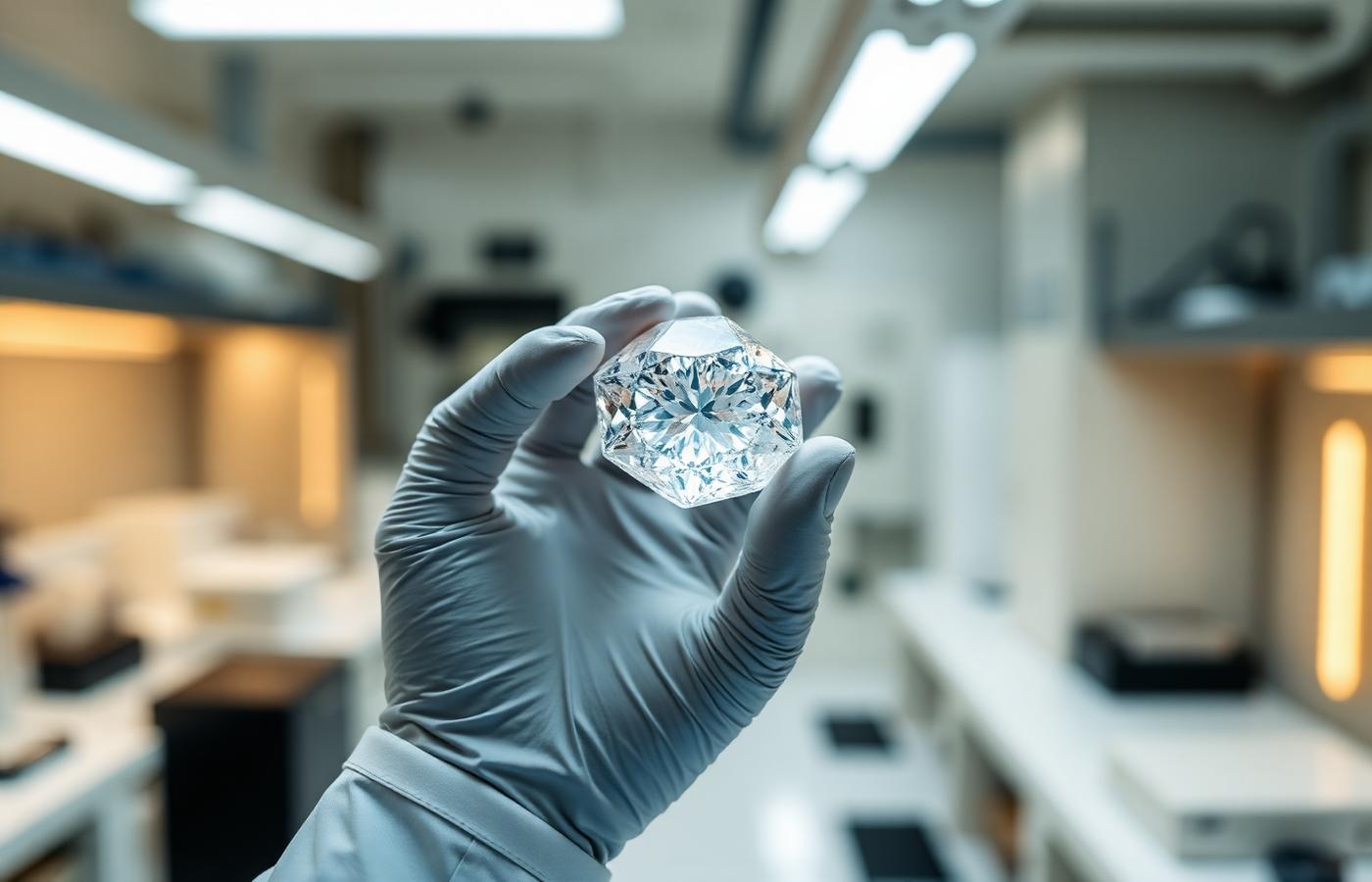
IGI and GIA are not interchangeable
Both are respected independent laboratories and both grade laboratory-grown diamonds. They are not identical in practice. IGI has graded the majority of the world's laboratory-grown stones for years and issues full colour and clarity grades on laboratory-grown reports; GIA moved to full grades for laboratory-grown diamonds more recently after previously using descriptive ranges.
Graders are people, and the same stone can land a grade apart between laboratories, or even between two submissions to the same one. This is the single most common reason two listings that look identical on paper are priced differently. Compare stones from the same laboratory, and treat any listing without a named laboratory as unverified. Every diamond Modern Origin offers is graded by IGI only.
We tell you which laboratory graded each stone on the product page, and the report number appears on your invoice and appraisal.
Verify it yourself, in three steps
Check the report against the piece
Your IGI report is included with your piece. The shape, carat weight, measurements and grades should match the stone you received — we check exactly that in Tampa before anything ships.
Look it up at the source
IGI publishes a free report-check tool on its own website. Enter the number and confirm every field matches the document you were given. Do this on the laboratory's site directly rather than through any link a seller — including us — hands you.
Keep the paperwork together
Store the report and the insurance appraisal together, and photograph both. If you ever need to make a claim or resize with another jeweler, those two documents answer nearly every question that comes up.
Every diamond we sell is a laboratory-grown (laboratory-created) diamond and is not a mined diamond. Our stones are untreated and uncoated unless a treatment is disclosed on the product page and on the grading report.
Learn hub
Continue learning
- Lab-Grown Diamonds 101What a laboratory-grown diamond is, how it's made and how it's verified.
- Lab vs. MinedWhere the two are identical, where they differ, and how the economics work.
- The 4CsCut, color, clarity and carat — and where to spend and save.
- CVD vs. HPHTThe two growth methods explained without the chemistry lecture.
- Diamond ShapesHow each shape behaves in light, and which ratios to look for.
- Diamond Buying GuideA step-by-step order of decisions for buying remotely with confidence.
- FAQsStraight answers on grading, sizing, shipping, warranty and care.