Learn · Comparison
Lab-grown vs. mined, without the sales pitch.
We sell laboratory-grown diamonds, so treat this page with the skepticism it deserves — and then check every claim on it against an independent grading report. The short version: the two stones are the same material, they are graded by the same laboratories on the same scales, and they differ in origin, supply, and price. That last one is where the interesting decisions live.
Side by side
| Laboratory-grown diamond | Mined diamond | |
|---|---|---|
| Material | Crystallized carbon in a cubic lattice — a diamond by material definition. | Crystallized carbon in a cubic lattice — the same material. |
| Hardness | 10 on the Mohs scale. | 10 on the Mohs scale. |
| Refractive index / brilliance | Approximately 2.42; brilliance is driven by cut quality, not origin. | Approximately 2.42; same dependence on cut. |
| Origin | Grown in a controlled chamber over roughly two to twelve weeks. | Formed in the earth's mantle and brought up by volcanic activity. |
| Identification | Distinguished by growth patterns and trace elements using laboratory instruments. | Distinguished the same way; not separable by eye or loupe. |
| Grading | Graded on the same 4Cs by IGI and stated as laboratory-grown on the report. | Graded on the same 4Cs; the report states natural origin. |
| Typical inclusions | Metallic flux (HPHT) or fine graining and pinpoints (CVD). | Mineral crystals, feathers, clouds, and internal graining. |
| Supply | Repeatable and scheduled; specific sizes and grades can be produced to order. | Finite and irregular; large, high-clarity rough is genuinely scarce. |
| Price behavior | Priced against production cost and a short supply chain; has trended down as capacity grew. | Priced against scarcity and long-standing trade channels. |
| Resale | Secondary market is thin. Buy it because you want to wear it. | A secondary market exists, but consumer resale usually returns a fraction of retail. |
Laboratory-grown diamonds are not mined diamonds. We say so on every product page, on the invoice, and on the grading report that ships with your stone.
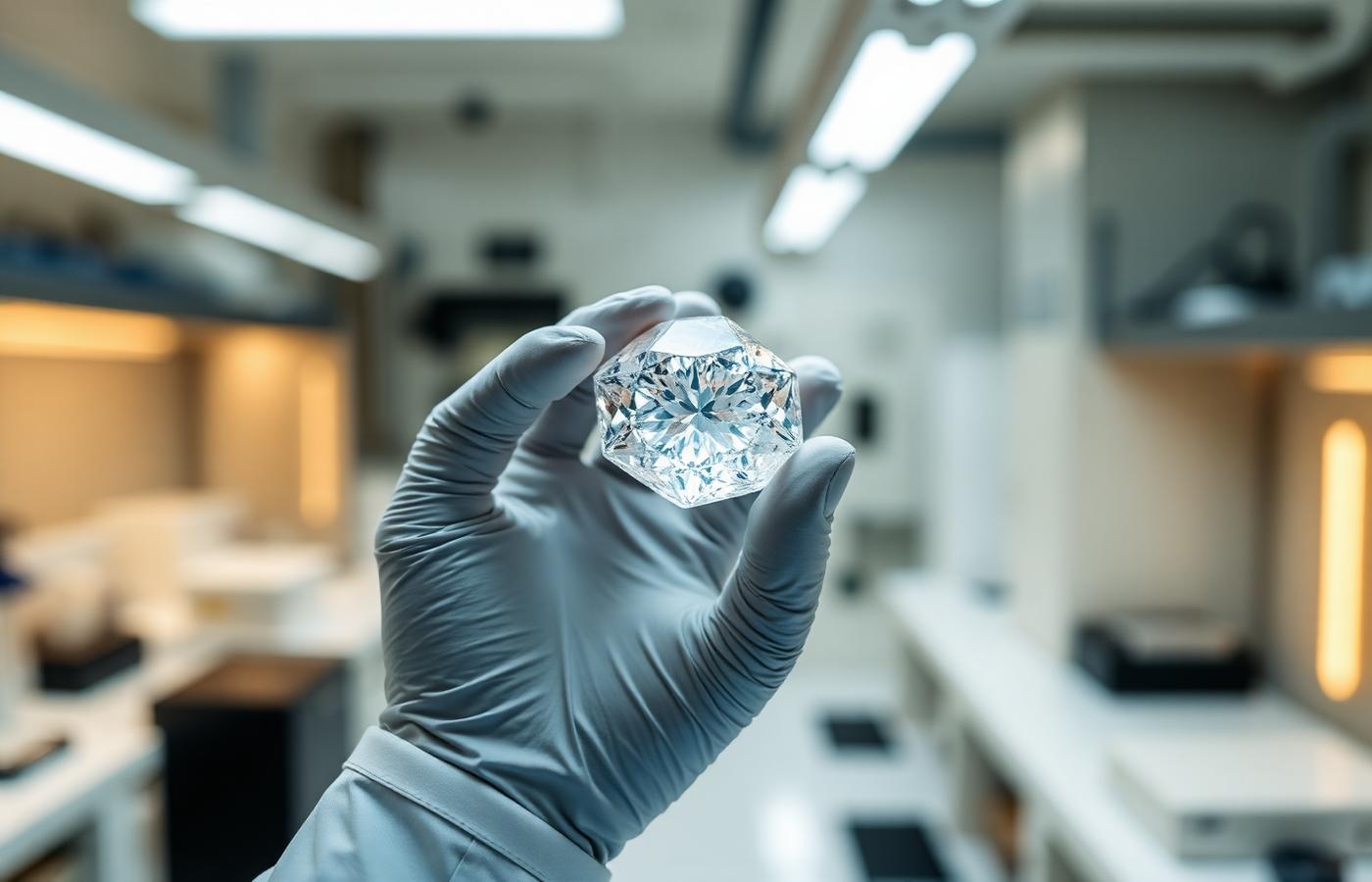
Where the price difference comes from
A mined diamond's price reflects exploration, extraction, sorting, and a trade structure built over more than a century around limited supply. A laboratory-grown diamond's price reflects reactor time, electricity, seed plates, cutting, and grading — inputs that get cheaper as growers add capacity and improve yield.
That is the whole mechanism. It is not a discount on a lesser product, and it is not a permanent guarantee either: laboratory-grown prices have fallen substantially since 2018 and may keep moving. We price against our own cost, which is why you will not see a struck-through "compare at" number anywhere on this site.
- Budget goes further. The same spend typically buys a larger stone, a better cut grade, or a heavier mounting.
- Not an investment. Neither origin is. Treat any diamond as jewelry you intend to wear.
- Insurance works the same. Insure at replacement value using the appraisal that ships with your piece.
Which one should you buy?
Choose laboratory-grown if you want the largest, best-cut stone your budget allows, if you want a documented, traceable origin, or if you're building a piece — a five-carat tennis bracelet, a set of eternity bands — where matched stones at scale would otherwise be out of reach.
Choose mined if the geological origin of the stone matters to you personally, if you are matching a family heirloom, or if the story of the stone is part of what you're giving. Those are real reasons, and no comparison table overrides them.
What we will not tell you is that one is "better." They are the same material with different histories and different economics. The decision is about which of those you're buying.
Learn hub
Continue learning
- Lab-Grown Diamonds 101What a laboratory-grown diamond is, how it's made and how it's verified.
- The 4CsCut, color, clarity and carat — and where to spend and save.
- CVD vs. HPHTThe two growth methods explained without the chemistry lecture.
- Diamond ShapesHow each shape behaves in light, and which ratios to look for.
- Diamond Buying GuideA step-by-step order of decisions for buying remotely with confidence.
- IGI Grading ReportsRead your report line by line and verify it at the laboratory.
- FAQsStraight answers on grading, sizing, shipping, warranty and care.